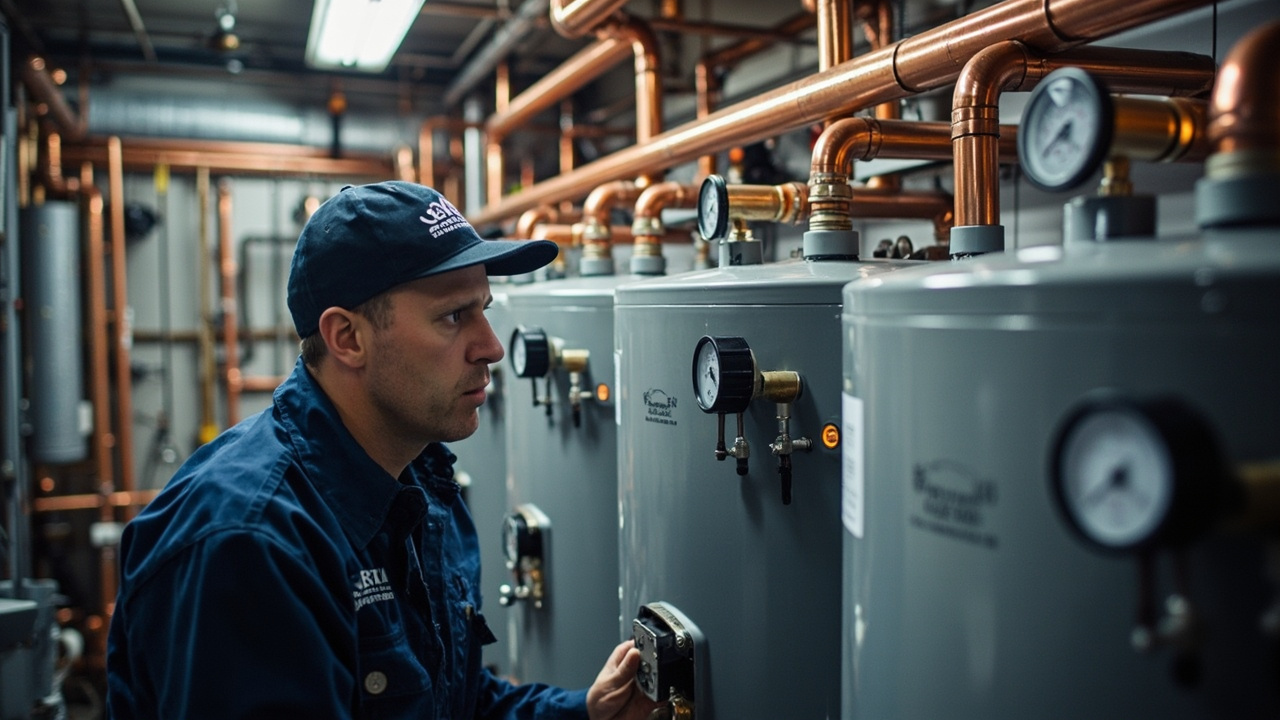


Cincinnati Water Works delivers water averaging 12 grains per gallon hardness, a moderate level that nonetheless causes calcium carbonate scaling in commercial hot water systems operating at elevated temperatures. The Greater Cincinnati Water Works treatment process adds orthophosphate for corrosion control, but this compound accelerates anode rod depletion in tank-type heaters. Commercial operations experience faster scale accumulation than residential users due to higher operating temperatures and continuous duty cycles. Industrial water heaters require scheduled descaling and anode rod inspection at intervals shorter than manufacturer baseline recommendations. Facilities drawing water from private wells in Butler County or Clermont County face different chemistry profiles requiring customized treatment strategies.
Hamilton County mechanical permits for commercial water heater replacement require detailed specifications and approved engineering stamps for systems exceeding 400,000 BTU input. Our established relationships with local inspectors and familiarity with Cincinnati's commercial building codes streamline the permitting process. We understand which installations require backflow prevention devices per Cincinnati Plumbing Code cross-connection control requirements and where thermal expansion tanks must be installed on closed-loop systems. This local expertise prevents failed inspections and ensures your large capacity water heaters meet all regulatory requirements from initial installation through ongoing operation.