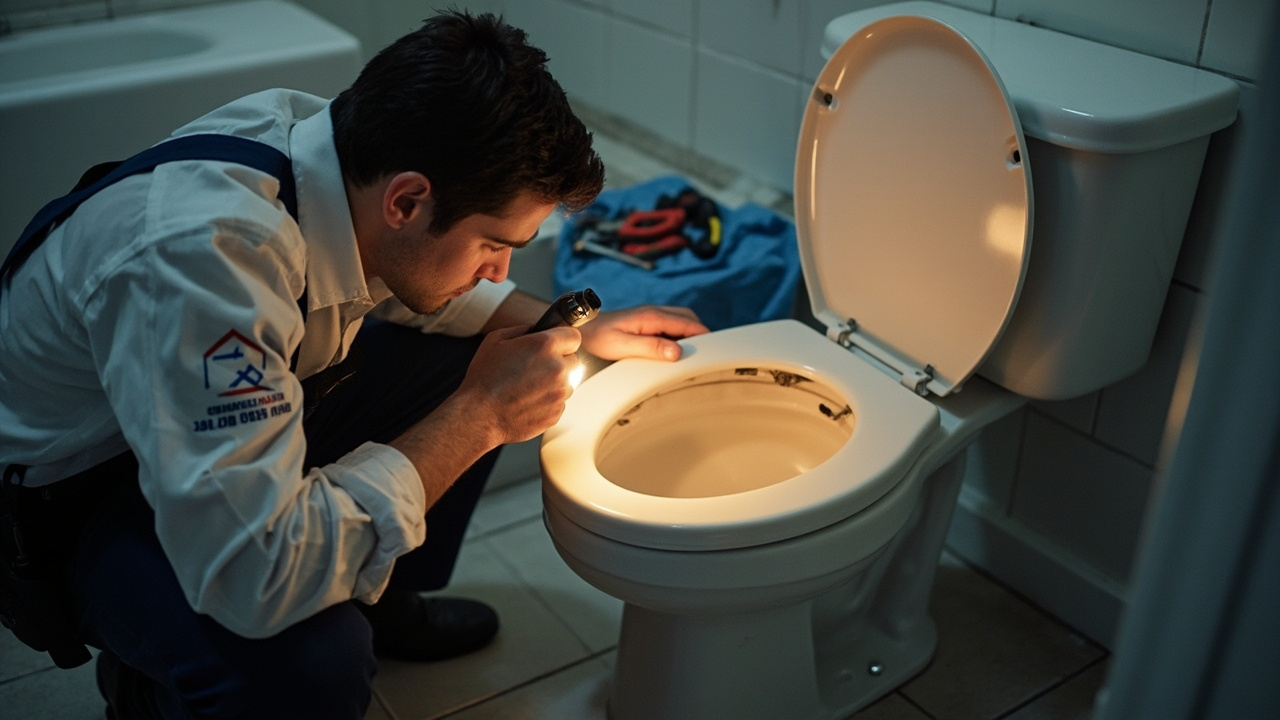
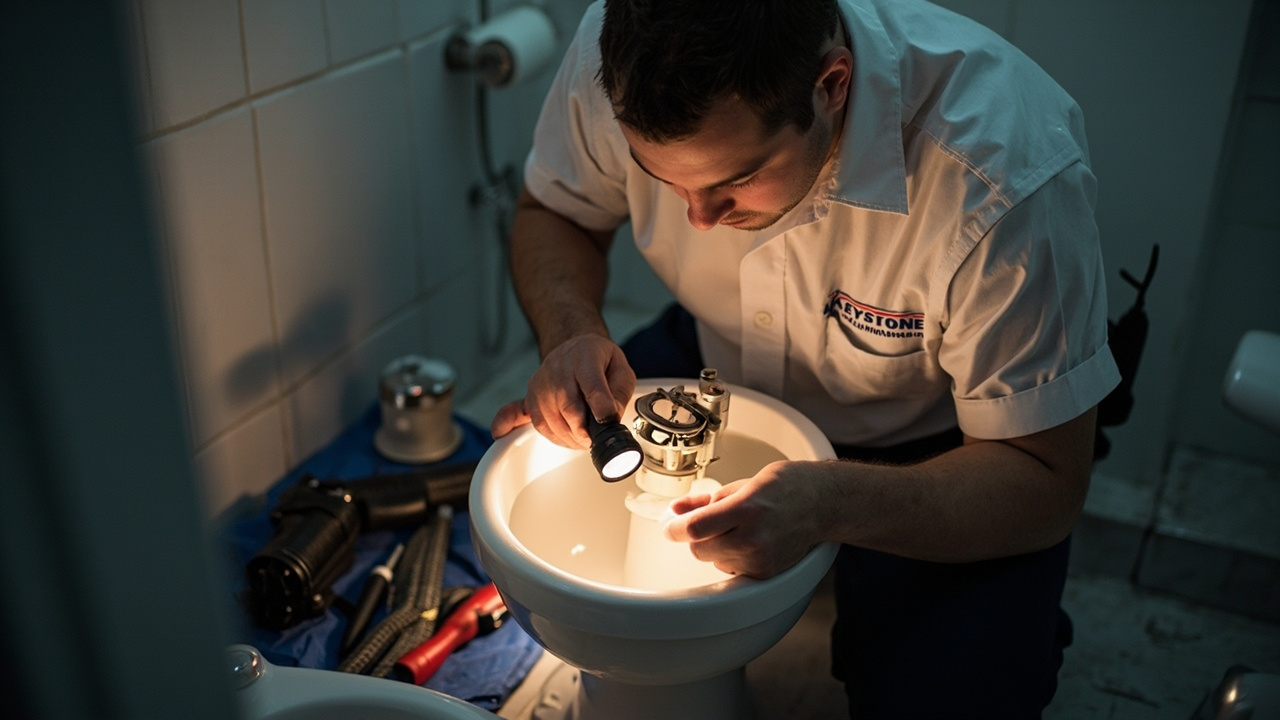
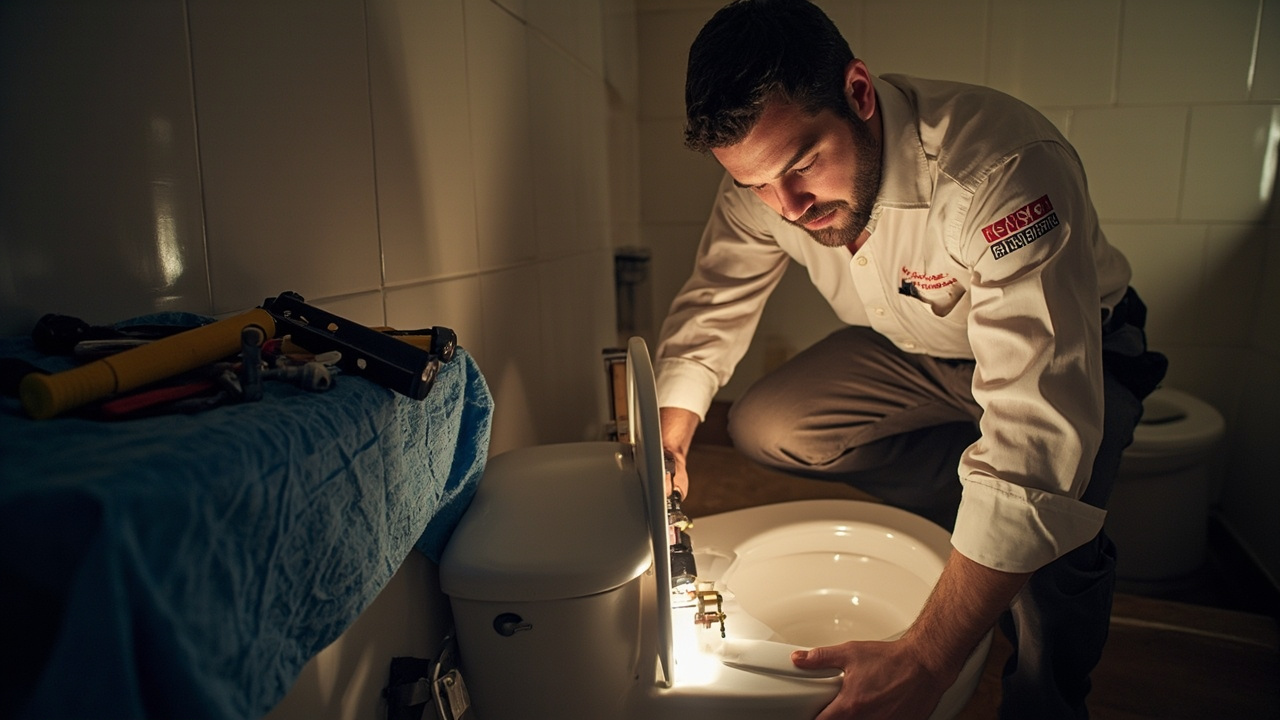
Cincinnati's water supply contains 12 to 15 grains per gallon of hardness, which classifies as moderately hard to hard water. That calcium and magnesium precipitates out as scale on any surface where water sits or flows slowly. Inside your toilet tank, mineral deposits accumulate on the flush valve seat, the fill valve diaphragm, and the rim of the overflow tube. Over time, that buildup prevents flappers from sealing cleanly even when the rubber remains flexible. You'll replace the flapper and still hear running water because the valve seat underneath is pitted with scale. Cincinnati homeowners experience shorter intervals between flapper replacements compared to homes with soft water, and fill valves clog more frequently from mineral deposits inside the valve body. We account for this when selecting replacement parts, choosing components that resist scale buildup and maintain proper function despite Cincinnati's water chemistry.
Keystone Plumbing Cincinnati has worked in neighborhoods across Hamilton County, from the historic homes in Hyde Park to the newer developments in West Chester Township. We've seen how different water sources and pipe materials interact with toilet components, and we understand the local plumbing standards that govern installation and repair. Cincinnati's plumbing code requires proper venting and backflow prevention, but it doesn't mandate specific toilet component brands or styles. That gives us flexibility to recommend the best parts for your water conditions and usage patterns rather than defaulting to whatever's cheapest. When you hire a local plumber who knows Cincinnati's water, Cincinnati's homes, and Cincinnati's infrastructure, you get repairs that account for the full picture, not just the broken part in front of us.