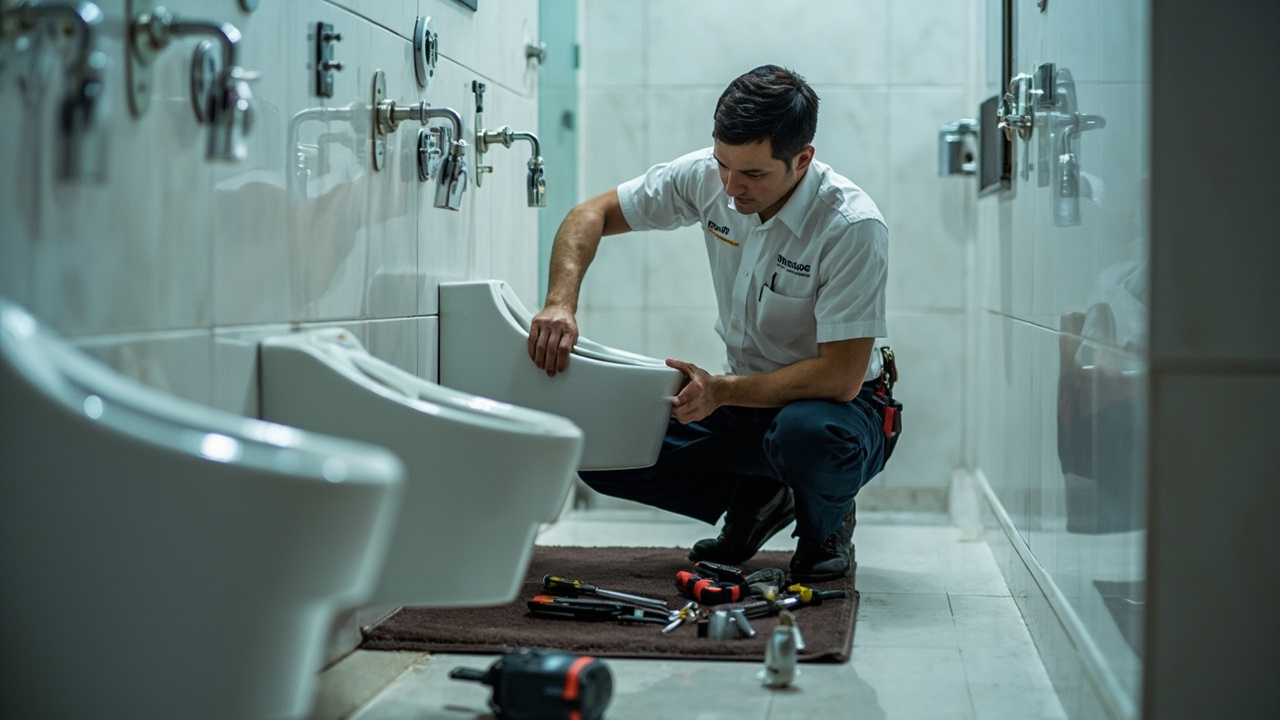
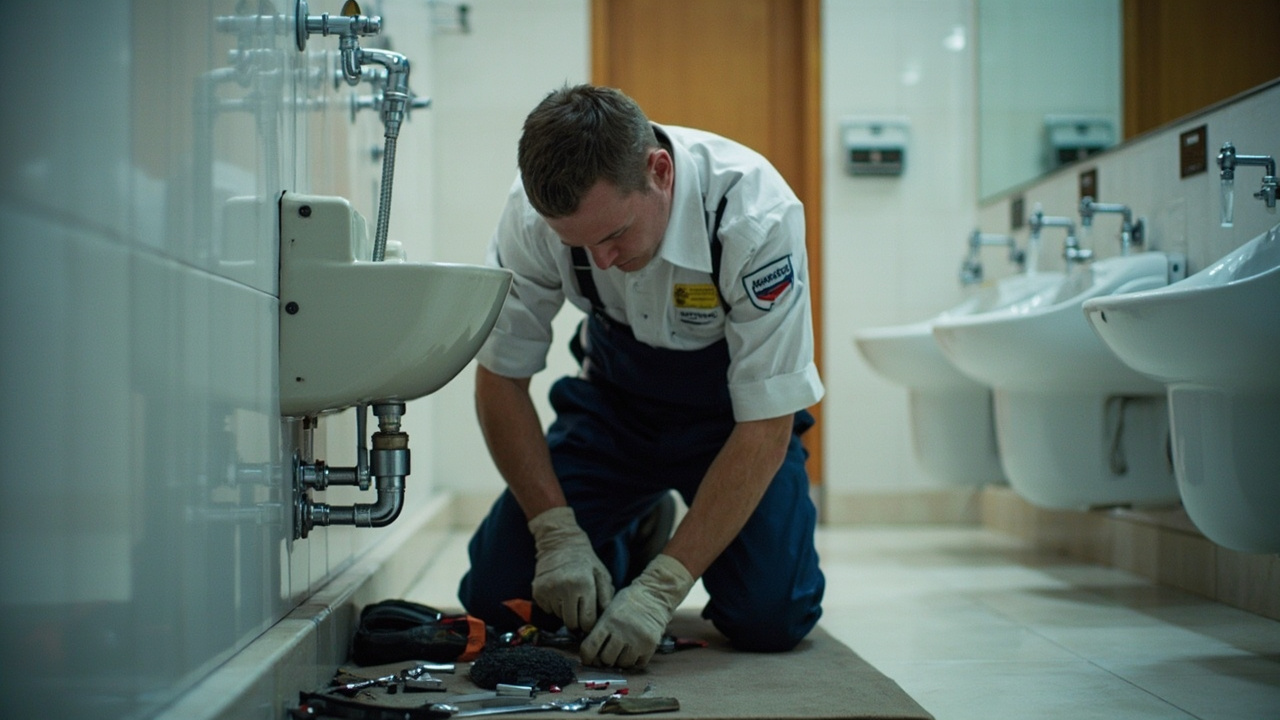
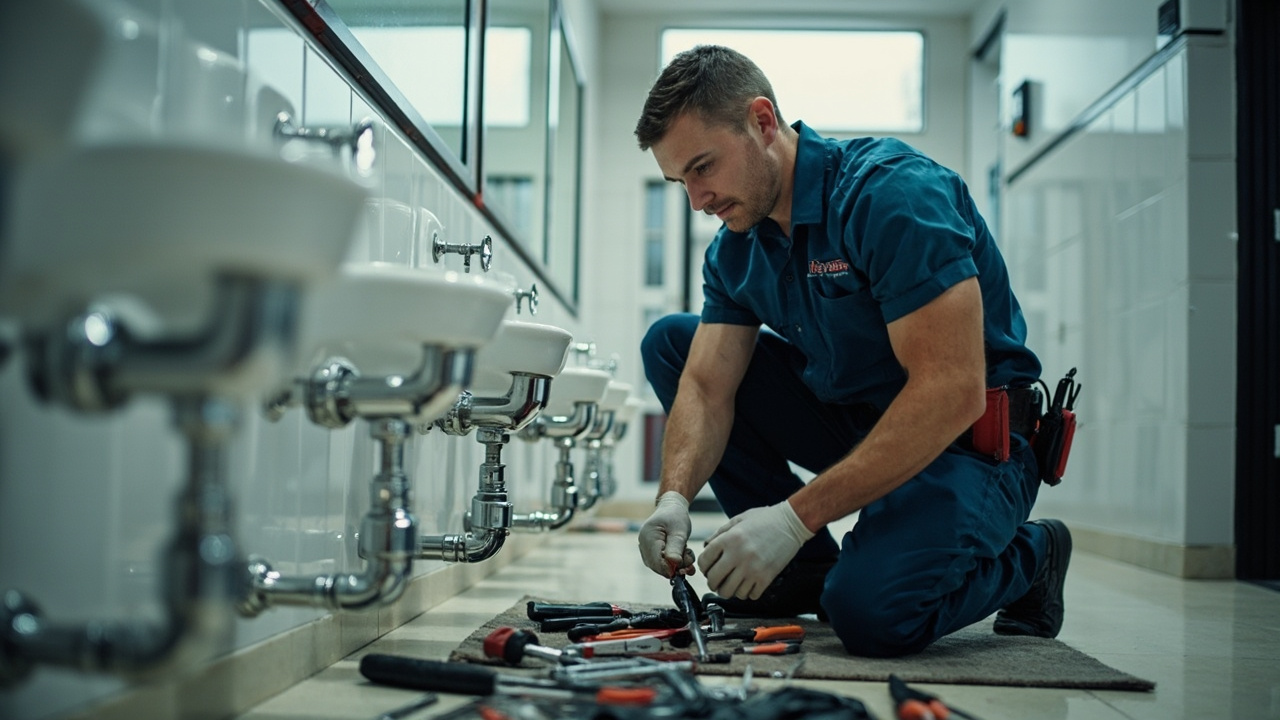
Cincinnati's municipal water supply, drawn from the Ohio River and treated by Greater Cincinnati Water Works, contains dissolved minerals that accelerate component wear in commercial flush valves. The water hardness averaging 120-180 mg/L as calcium carbonate causes mineral deposits in the bypass orifices and diaphragm seats of flushometer assemblies. These deposits restrict water flow, extend flush cycles, and eventually cause complete valve failure. Commercial facilities with high fixture usage see accelerated buildup compared to residential applications. Buildings served by older distribution lines experience higher sediment loads that clog flush valve screens and damage diaphragm seals. Industrial toilet repair services in Cincinnati must account for these water quality factors when diagnosing premature component failures and recommending maintenance intervals.
Commercial plumbing in Cincinnati requires understanding local code enforcement practices and the specific fixture requirements that apply to different business types. Hamilton County health inspectors focus on restroom capacity ratios, fixture functionality, and ADA compliance during routine inspections. Buildings in Cincinnati's historic districts face additional restrictions on exterior plumbing modifications that affect vent stack routing and waste line replacement options. Keystone Plumbing Cincinnati maintains relationships with local code officials and understands the documentation requirements for commercial plumbing permits. Our technicians know which repairs require permits, how to navigate Cincinnati's inspection process, and how to ensure your restroom facilities meet all regulatory requirements for your business classification.