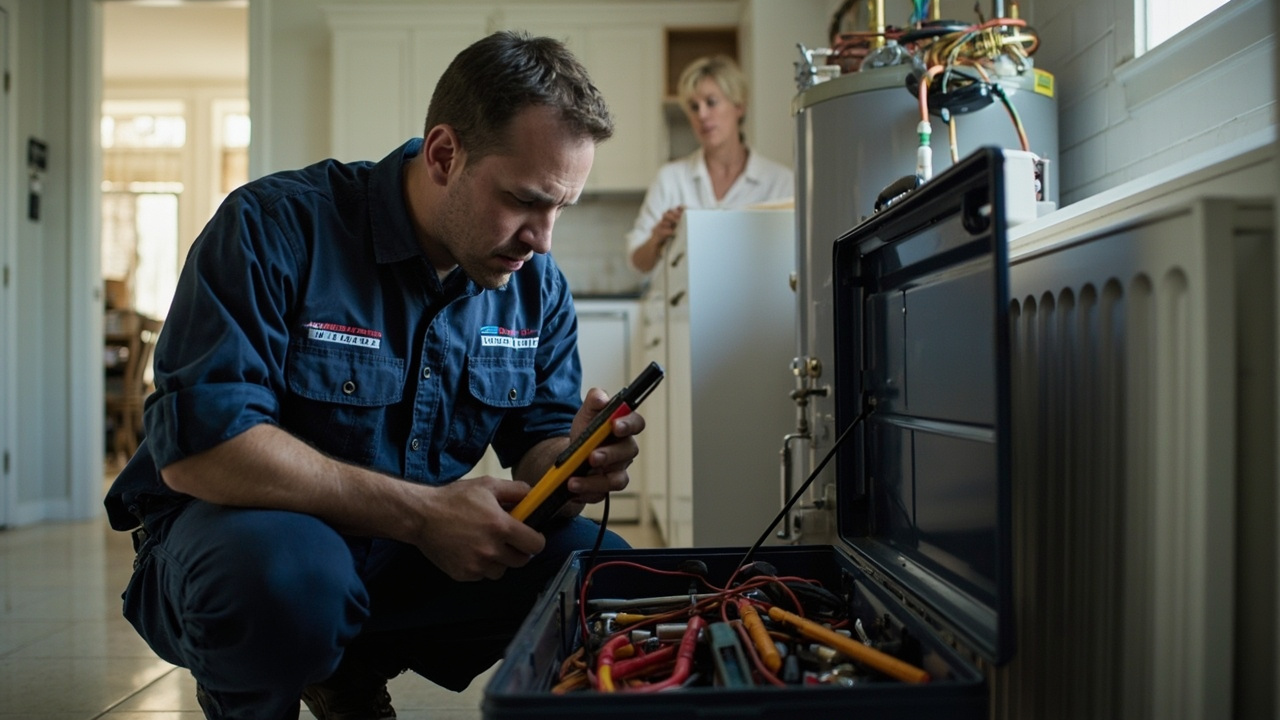
Cincinnati's water supply comes from the Ohio River and underground aquifers. Both sources deliver water with high concentrations of calcium and magnesium. These minerals precipitate out of solution when water heats above 130 degrees. They settle at the bottom of your tank as sediment. Over time, this layer can reach two to four inches thick. It insulates the heating element from the water, which forces the element to overheat. The high-limit switch trips or the element burns out. Gas heaters suffer differently. Sediment on the bottom of the tank traps heat and causes the tank floor to overheat, which accelerates rust and leaks. Hard water also depletes the sacrificial anode rod faster. Once the anode is gone, the tank itself starts to corrode. Most no hot water diagnosis calls in Cincinnati trace back to hard water damage in some form.
Cincinnati adopted the 2018 International Residential Code in 2020. This code requires thermal expansion tanks on all closed-loop water heater systems. A closed-loop system means your water heater has a backflow preventer or pressure-reducing valve on the supply line. When water heats, it expands. If that expanded water has nowhere to go, pressure builds inside the tank. High pressure causes early failure of the temperature and pressure relief valve, stresses tank seams, and can blow out heating elements. Many older Cincinnati homes do not have expansion tanks because they were not required when the water heater was installed. We check for this during every diagnosis. Proper code compliance prevents future failures and is required for permit-compliant water heater replacement.