
How to Get Rid of Stubborn Orange Iron Stains in Your Milford Bathroom
Those bright orange stains in your Milford bathroom sink, tub, or toilet aren’t just unsightly—they’re a telltale sign of high iron content in your water. If you’re seeing rusty discoloration that won’t scrub away with regular cleaners, you’re dealing with oxidized iron that’s bonded to your porcelain surfaces. The good news is that with the right approach, you can remove these stubborn stains and prevent them from coming back. Finding the Best Water Heater Replacement for Your West Chester House.
Milford residents often face this challenge because the area’s groundwater naturally contains higher iron levels. When iron-rich water sits on surfaces and is exposed to air, it oxidizes and creates those characteristic reddish-brown stains. Whether you’re in the Old Milford historic district or newer developments near the East Fork State Park area, this guide will walk you through effective solutions that actually work. No Hot Water Diagnosis.
What Causes Those Orange Stains in Your Milford Bathroom?
Iron stains form when ferrous iron in your water supply comes into contact with oxygen and moisture. In Milford, this is particularly common due to the area’s geological makeup and the East Fork Little Miami River watershed. The oxidation process creates ferric oxide—that stubborn reddish substance that clings to porcelain, tile, and metal fixtures.. Read more about Comparing the Best Water Heater Brands for Local Water Conditions in Cincinnati.
Local water quality reports show that Clermont County, including Milford, often tests above the EPA’s recommended iron levels of 0.3 mg/L. While not harmful to drink, this excess iron wreaks havoc on bathroom surfaces. The problem intensifies in homes with older galvanized pipes, which are common in Milford’s established neighborhoods like Miami Trails and the areas around Milford High School. EPA secondary drinking water standards.
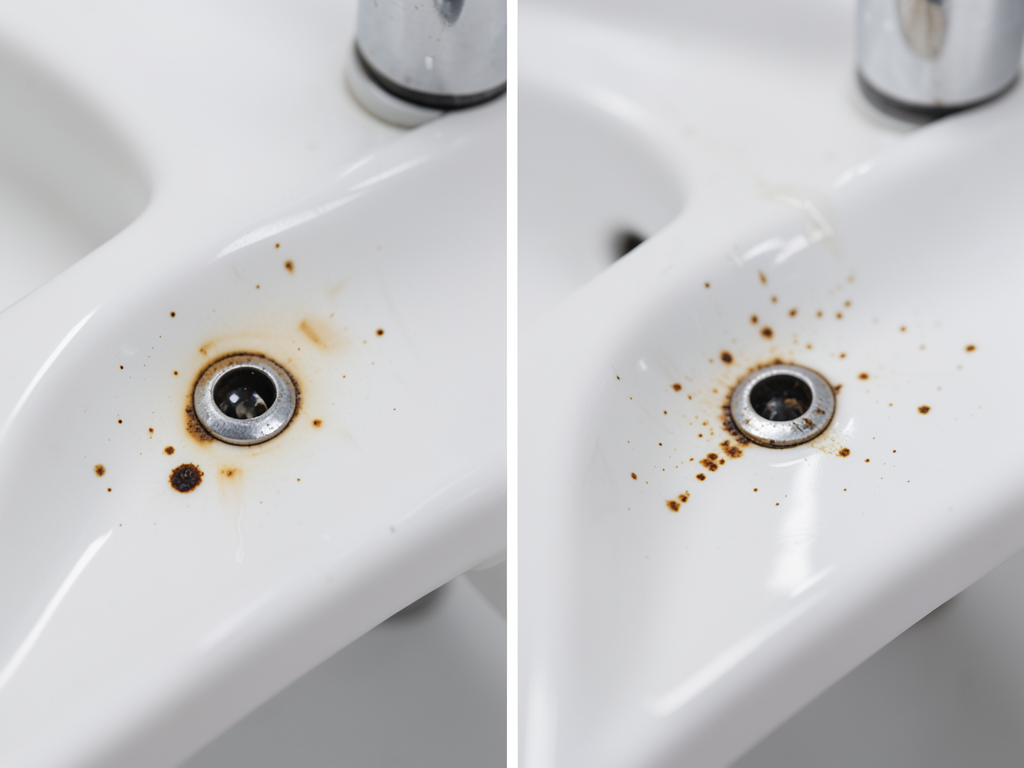
Close-up of iron stains on porcelain before and after cleaning, showing the dramatic difference professional-grade cleaners can make.
Top 3 DIY Methods for Iron Stain Removal
Natural Solutions: Vinegar and Baking Soda
For light to moderate stains, start with this safe, natural approach. Mix equal parts white vinegar and baking soda to create a paste. Apply it directly to the stained areas and let it sit for 15-20 minutes. The acetic acid in vinegar breaks down the iron oxide while the baking soda provides gentle abrasion.
This method works best on fresh stains and is ideal for families concerned about harsh chemicals. However, for Milford’s particularly stubborn iron deposits, you may need to repeat the process several times or move to stronger solutions.. Read more about Why Blue Ash Families are Choosing Under-Sink Reverse Osmosis Systems for Drinking Water.
The Power of Citric Acid (Lemon Juice)
Citric acid is a natural chelating agent that binds to iron particles, making them easier to remove. For this method, you’ll need concentrated lemon juice or food-grade citric acid powder. Create a solution of 1/4 cup citric acid per gallon of hot water, or use straight lemon juice for spot treatment.
Apply the solution to stains, cover with plastic wrap to prevent evaporation, and let it sit for at least an hour. The acid penetrates and dissolves the iron oxide without damaging most bathroom surfaces. This approach is particularly effective for Milford residents dealing with well water iron stains, which tend to be more concentrated than municipal water issues.
When to Use Professional-Grade Rust Removers
For severe stains that resist natural methods, commercial rust removers containing oxalic acid or hydrochloric acid formulations can be effective. Products like Iron Out or Bar Keepers Friend are specifically designed to tackle iron deposits without etching porcelain when used correctly.
Always wear gloves and eye protection when using these products. Apply according to package directions, typically letting the solution sit for 5-10 minutes before scrubbing with a non-abrasive pad. Never use steel wool or abrasive scrubbers on porcelain—they create microscopic scratches that trap more iron and make future staining worse.
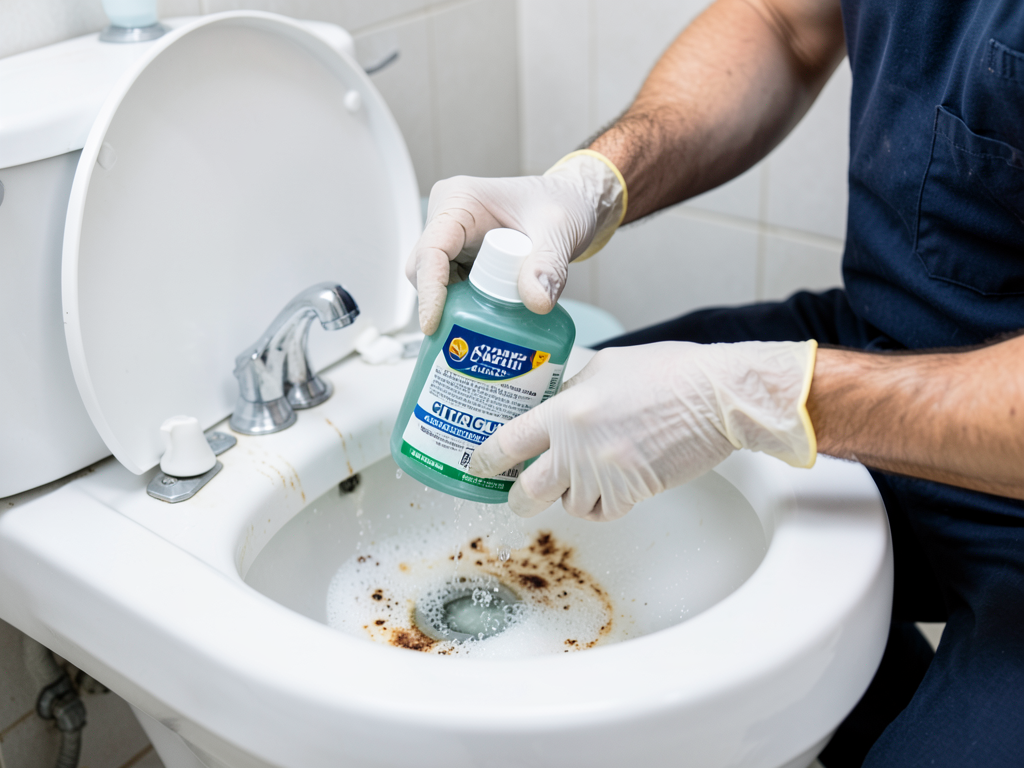
Technician demonstrating proper application of citric acid solution on a stained toilet bowl, showing the fizzing reaction that indicates iron dissolution.
What to Avoid: The Bleach Mistake
Here’s a critical warning that could save you hours of frustration: never use chlorine bleach on iron stains. While bleach seems like a logical cleaning choice, it actually sets iron stains permanently through a chemical reaction called oxidation. The chlorine oxidizes the dissolved iron, creating even darker, more stubborn discoloration that penetrates deeper into porous surfaces.
This is especially important for Milford homeowners because our local water often contains both iron and manganese. Bleach reacts with both minerals, potentially creating black or purple stains that are nearly impossible to remove without professional intervention.
Preventing Recurring Stains in Cincinnati Homes
Once you’ve removed the stains, preventing their return requires addressing the source. For Milford residents, this often means installing a whole-house iron filter or water softener system. The Greater Cincinnati Water Works serves much of the area, but many Milford homes rely on private wells where iron content can exceed 10 mg/L—thirty times the EPA recommendation.
Water softeners remove dissolved iron through ion exchange, but they require specific settings for high-iron water. A standard softener might handle 1-3 ppm iron, but Milford’s levels often demand specialized resin or additional filtration stages. The Cincinnati Health Department recommends annual water testing for homes with private wells to monitor mineral content and bacterial contamination.
Regular maintenance also helps. Wipe down wet surfaces after use, especially in bathrooms with poor ventilation. Consider installing a whole-house sediment filter before your water softener to catch iron particles before they reach your fixtures. For severe cases, an aeration system can oxidize dissolved iron before it enters your plumbing, allowing particles to be filtered out. Who to Call for an Emergency Plumbing Crisis in Downtown Cincinnati.
DIY vs. Professional: When to Call a Plumber
While most iron stains are cosmetic issues you can handle yourself, certain situations warrant professional help. If you’re constantly battling stains despite regular cleaning, your problem likely runs deeper than surface deposits. Internal pipe corrosion in older galvanized plumbing—common in Milford homes built before 1970—continuously introduces iron into your water supply.
Professional plumbers can test your water’s iron content, identify the iron type (ferrous vs. ferric), and recommend appropriate treatment systems. They can also inspect your plumbing for corrosion that might be contributing to the problem. For Milford residents in areas like the Miami Meadows neighborhood or near Milford Elementary, where homes often have original plumbing, this inspection is particularly valuable.
Another red flag: if you notice rusty water from multiple fixtures, not just bathroom surfaces. This indicates systemic iron issues that DIY cleaning won’t solve. Professional water treatment specialists can install multi-stage filtration systems that handle iron, manganese, and other minerals common in Clermont County’s groundwater. Clermont County Water Department.
Water testing kit showing iron levels in ppm, demonstrating how professionals diagnose the severity of iron contamination in Milford homes.
Special Considerations for Milford’s Water Quality
Milford’s location along the East Fork Little Miami River influences its water characteristics. The area’s limestone bedrock contributes to water hardness, which often correlates with higher iron content. According to the Clermont County Water Department, many private wells in the area test between 2-8 ppm iron, with some exceeding 10 ppm during dry seasons when water tables drop. What to Expect During a Main Sewer Line Repair in Loveland.
The Ohio EPA’s drinking water standards allow up to 0.3 mg/L of iron for aesthetic reasons, but many Milford homes exceed this without realizing it. The difference between municipal water (treated at water plants) and private well water can be dramatic. Homes near Milford’s historic downtown area might have municipal water with controlled iron levels, while properties in the surrounding townships often deal with untreated well water.. Read more about Choosing Between Point-of-Use and Whole House Water Filtration for Your Loveland Property.
For homes with persistent iron issues, consider installing a dedicated iron filter before your water softener. These systems use oxidation and filtration to remove iron particles that would otherwise overwhelm a standard softener. The initial investment typically ranges from $1,500 to $3,500 but can save hundreds in cleaning products and fixture replacement over time.
Maintaining Your Bathroom After Iron Stain Removal
After successfully removing iron stains, establish a maintenance routine to keep surfaces clean. For Milford’s hard water conditions, weekly cleaning with a mild acid-based cleaner prevents new stains from forming. Products containing citric acid or phosphoric acid work well for maintenance without the harshness of hydrochloric acid.
Consider upgrading to fixtures with smooth, non-porous surfaces that resist staining. Modern porcelain and vitreous china are more stain-resistant than older bathroom fixtures. If you’re remodeling, ask about iron-resistant finishes and materials suited to high-iron water areas.
Also, check your toilet’s internal components regularly. High iron content can cause rubber flappers and fill valves to deteriorate faster than normal. Replacing these parts every 2-3 years instead of the typical 5-year lifespan can prevent leaks and reduce staining in the bowl. Quick Toilet Repair and Installation Services in Montgomery.
Local Resources for Milford Water Issues
Milford residents dealing with persistent water quality issues have several local resources. The Clermont County Department of Water Resources offers water testing services for a nominal fee. The Ohio State University Extension office in Batavia provides educational resources about well maintenance and water treatment options specific to Southwest Ohio’s geology.
For professional assistance, local plumbing companies familiar with Milford’s water challenges can provide targeted solutions. They understand the specific mineral profiles common to the East Fork watershed and can recommend systems proven effective in similar local conditions.
Remember that water quality can vary significantly even within Milford. Homes near the river might have different mineral content than those in the higher elevations around Mulberry Elementary. Professional testing is the only way to know exactly what’s in your water and how to treat it effectively.
Frequently Asked Questions
Why do my iron stains keep coming back even after cleaning?
Recurring stains indicate ongoing iron exposure from your water supply. Unless you address the source—whether through filtration, pipe replacement, or water treatment—surface cleaning provides only temporary relief. Milford’s high-iron groundwater means many homes need whole-house treatment for lasting results.
Are iron stains harmful to my health?
Iron stains themselves aren’t harmful, and drinking water with elevated iron levels isn’t considered dangerous for most people. However, the same conditions that cause iron staining can sometimes indicate other water quality issues. If you’re concerned about your water’s safety, contact the Clermont County Health Department for testing recommendations.
How much does professional iron filtration cost in Milford?
Professional iron filtration systems for Milford homes typically range from $1,500 to $4,000 installed, depending on your specific water chemistry and household size. Homes with very high iron content or additional issues like sulfur might need more advanced multi-stage systems at the higher end of that range.
Can I use these cleaning methods on colored porcelain or enameled surfaces?
Most acid-based cleaners are safe for colored porcelain and enamel when used as directed, but always test in an inconspicuous area first. Avoid abrasive scrubbers on any colored surface, as they can damage the finish. For delicate or vintage fixtures, consider professional cleaning to avoid accidental damage.
How long does it take to remove severe iron stains?
Light stains may disappear in one treatment, but severe iron deposits often require multiple applications over several days. The process involves letting cleaning solutions penetrate the stains, which takes time. Be patient—rushing with excessive scrubbing or stronger chemicals can damage surfaces without improving results.
Take Control of Your Bathroom’s Appearance Today
Those stubborn orange stains don’t have to be a permanent fixture in your Milford bathroom. Whether you choose DIY methods for minor issues or professional treatment for chronic problems, there’s a solution that fits your situation. The key is understanding that Milford’s unique water characteristics require targeted approaches rather than one-size-fits-all cleaning.
If you’ve tried everything and those stains keep coming back, it’s time to address the root cause. Professional water testing and treatment can transform not just your bathroom’s appearance but your entire home’s water quality. Don’t let iron stains damage your fixtures and ruin your bathroom’s appearance any longer.
Call (513) 717-2899 today to schedule your water quality assessment. Our Milford plumbing experts understand the specific challenges of Clermont County’s water and can recommend solutions that actually work for your home. Pick up the phone and call (513) 717-2899 before the next stubborn stain sets in.
Ready to say goodbye to orange stains forever? Contact us at (513) 717-2899 to learn about water treatment options that prevent stains at the source. Your bathroom deserves to look as good as new—let’s make it happen.
{
“@context”: “https://schema.org”,
“@type”: “BlogPosting”,
“headline”: “How to Get Rid of Stubborn Orange Iron Stains in Your Milford Bathroom”,
“description”: “Tired of rusty orange stains in your Milford bathroom? Discover proven DIY methods and when to call a Cincinnati plumber for lasting iron stain solutions.”,
“wordCount”: 2072,
“datePublished”: “2026-04-28T13:05:00.000Z”,
“dateModified”: “2026-04-28T13:05:00.000Z”,
“inLanguage”: “en-US”,
“mainEntityOfPage”: {
“@type”: “WebPage”,
“@id”: “https://keystoneplumbingcincinnati.com”
},
“publisher”: {
“@type”: “LocalBusiness”,
“name”: “Keystone Plumbing Cincinnati”,
“url”: “https://keystoneplumbingcincinnati.com”
},
“author”: {
“@type”: “Organization”,
“name”: “Keystone Plumbing Cincinnati”,
“url”: “https://keystoneplumbingcincinnati.com”
},
“image”: {
“@type”: “ImageObject”,
“url”: “https://keystoneplumbingcincinnati.com/wp-content/uploads/2026/03/how-to-get-rid-of-stubborn-orange-iron-stains-in-y-1.png”
}
}
{
“@context”: “https://schema.org”,
“@type”: “Plumber”,
“name”: “Keystone Plumbing Cincinnati”,
“url”: “https://keystoneplumbingcincinnati.com”,
“address”: {
“@type”: “PostalAddress”,
“addressLocality”: “Cincinnati”
},
“areaServed”: {
“@type”: “City”,
“name”: “Cincinnati”
}
}
{
“@context”: “https://schema.org”,
“@type”: “FAQPage”,
“mainEntity”: [
{
“@type”: “Question”,
“name”: “What Causes Those Orange Stains in Your Milford Bathroom?”,
“acceptedAnswer”: {
“@type”: “Answer”,
“text”: “Iron stains form when ferrous iron in your water supply comes into contact with oxygen and moisture. In Milford, this is particularly common due to the area’s geological makeup and the East Fork Little Miami River watershed. The oxidation process creates ferric oxide—that stubborn reddish substance that clings to porcelain, tile, and metal fixtures.”
}
},
{
“@type”: “Question”,
“name”: “Why do my iron stains keep coming back even after cleaning?”,
“acceptedAnswer”: {
“@type”: “Answer”,
“text”: “Recurring stains indicate ongoing iron exposure from your water supply. Unless you address the source—whether through filtration, pipe replacement, or water treatment—surface cleaning provides only temporary relief. Milford’s high-iron groundwater means many homes need whole-house treatment for lasting results.”
}
},
{
“@type”: “Question”,
“name”: “Are iron stains harmful to my health?”,
“acceptedAnswer”: {
“@type”: “Answer”,
“text”: “Iron stains themselves aren’t harmful, and drinking water with elevated iron levels isn’t considered dangerous for most people. However, the same conditions that cause iron staining can sometimes indicate other water quality issues. If you’re concerned about your water’s safety, contact the Clermont County Health Department for testing recommendations.”
}
},
{
“@type”: “Question”,
“name”: “How much does professional iron filtration cost in Milford?”,
“acceptedAnswer”: {
“@type”: “Answer”,
“text”: “Professional iron filtration systems for Milford homes typically range from $1,500 to $4,000 installed, depending on your specific water chemistry and household size. Homes with very high iron content or additional issues like sulfur might need more advanced multi-stage systems at the higher end of that range.”
}
},
{
“@type”: “Question”,
“name”: “Can I use these cleaning methods on colored porcelain or enameled surfaces?”,
“acceptedAnswer”: {
“@type”: “Answer”,
“text”: “Most acid-based cleaners are safe for colored porcelain and enamel when used as directed, but always test in an inconspicuous area first. Avoid abrasive scrubbers on any colored surface, as they can damage the finish. For delicate or vintage fixtures, consider professional cleaning to avoid accidental damage.”
}
},
{
“@type”: “Question”,
“name”: “How long does it take to remove severe iron stains?”,
“acceptedAnswer”: {
“@type”: “Answer”,
“text”: “Light stains may disappear in one treatment, but severe iron deposits often require multiple applications over several days. The process involves letting cleaning solutions penetrate the stains, which takes time. Be patient—rushing with excessive scrubbing or stronger chemicals can damage surfaces without improving results.”
}
}
]
}
{
“@context”: “https://schema.org”,
“@type”: “BreadcrumbList”,
“itemListElement”: [
{
“@type”: “ListItem”,
“position”: 1,
“name”: “Home”,
“item”: “https://keystoneplumbingcincinnati.com”
},
{
“@type”: “ListItem”,
“position”: 2,
“name”: “Blog”,
“item”: “https://keystoneplumbingcincinnati.com/blog”
},
{
“@type”: “ListItem”,
“position”: 3,
“name”: “How to Get Rid of Stubborn Orange Iron Stains in Your Milford Bathroom”
}
]
}
{
“@context”: “https://schema.org”,
“@type”: “Service”,
“serviceType”: “Plumbing”,
“provider”: {
“@type”: “LocalBusiness”,
“name”: “Keystone Plumbing Cincinnati”,
“url”: “https://keystoneplumbingcincinnati.com”
},
“areaServed”: {
“@type”: “City”,
“name”: “Cincinnati”
},
“description”: “Tired of rusty orange stains in your Milford bathroom? Discover proven DIY methods and when to call a Cincinnati plumber for lasting iron stain solutions.”
}