
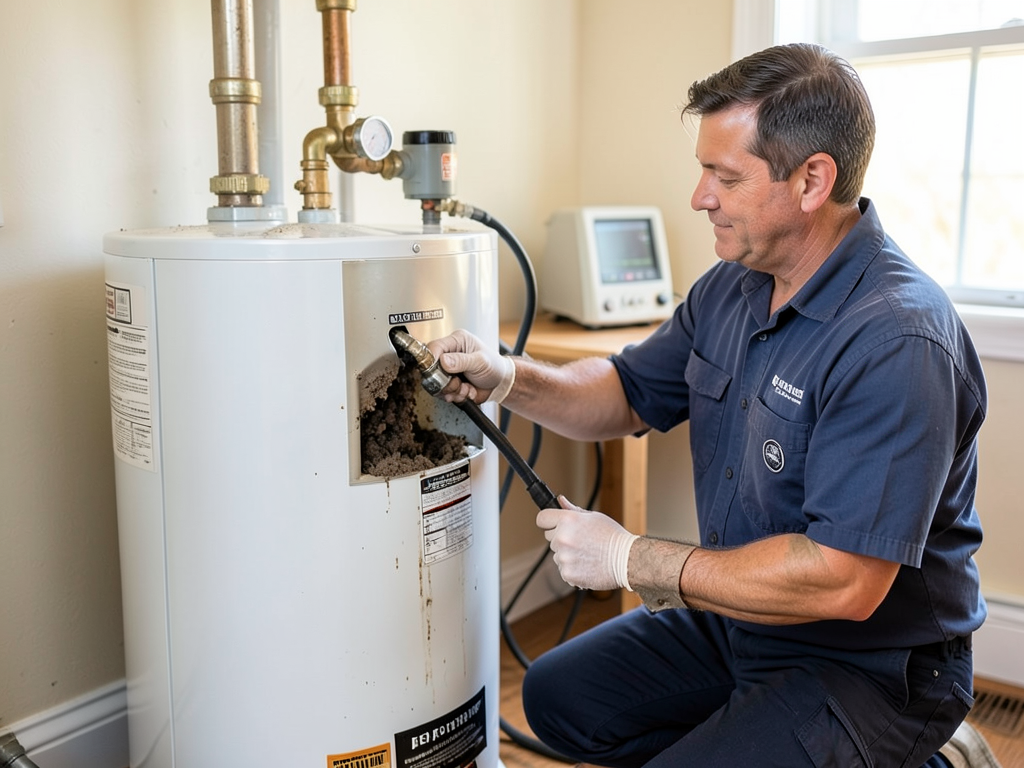
Hard water running through Hamilton County’s municipal system creates sediment that silently destroys water heaters in Dent. The Greater Cincinnati Water Works reports local water hardness levels between 7-11 grains per gallon—well above the 3-7 range considered moderate. That mineral-rich water flows through thousands of homes near Harrison Avenue and the Dent Schoolhouse, where scale builds up inside tanks faster than most homeowners realize. Greater Cincinnati Water Works.
Every year, that sediment layer thickens. It insulates the burner from the water it needs to heat, forcing your system to work longer and harder. The extra runtime shows up as higher utility bills and shorter equipment life. Without intervention, the tank’s bottom becomes a breeding ground for bacteria and corrosion that eventually leads to leaks or complete failure. Finding the Best Water Heater Replacement for Your West Chester House.
Professional flushing removes this damaging buildup before it causes problems. Our technicians use high-flow pumps to completely evacuate sediment, inspect the anode rod for corrosion, and test the temperature and pressure relief valve for proper function. This annual service typically extends a water heater’s life by 3-5 years and can reduce energy consumption by up to 15% in systems with heavy scale buildup.. Read more about Setting Your Water Heater Temperature to Prevent Scalding in Your Woodlawn Home.
The process takes about 60-90 minutes for most units. We shut off power and water supply, drain the tank completely, flush it with fresh water until it runs clear, then refill and restart the system. We also check for any signs of rust, test gas connections for leaks, and verify proper thermostat settings for Cincinnati’s climate.. Read more about How to Vet a Local Cincinnati Plumber Before They Step Into Your Maineville Home.
Many Dent homeowners notice improved hot water pressure and faster heating times after their first professional flush. The difference becomes especially noticeable during winter months when demand is highest and the system works hardest to maintain temperature. What to Expect During a Main Sewer Line Repair in Loveland.
Why Dent Homeowners Need Annual Water Heater Flushing
The specific geology around Dent creates conditions that accelerate water heater problems. Hamilton County’s limestone bedrock contributes to the high mineral content in municipal water. When that water sits in your tank, calcium and magnesium precipitate out and settle at the bottom.. Read more about Why Your New Water Heater in Springdale Might Need a Thermal Expansion Tank.
Local water quality reports from the Greater Cincinnati Water Works show consistent hardness levels that exceed national averages. This means sediment accumulates roughly twice as fast as in areas with softer water. A tank that might need flushing every 18-24 months elsewhere requires annual service here.
Beyond water chemistry, Dent’s climate affects water heater performance. Cold winter groundwater entering the system forces the burner to run longer cycles. When combined with sediment insulation, this creates a perfect storm of inefficiency and wear.
The age of homes in the area also matters. Many houses near the Dent Schoolhouse were built between 1960-1980 with original plumbing systems. These older units often have galvanized nipples and connections that corrode faster when exposed to sediment-laden water. Who to Call for an Emergency Plumbing Crisis in Downtown Cincinnati.
Professional flushing addresses all these factors. We use specialized equipment that creates turbulence inside the tank to dislodge stubborn scale deposits. Our technicians also apply anti-corrosion treatments to connections and inspect for early signs of tank degradation that homeowners might miss.
Regular maintenance prevents the cascade of problems that starts with sediment. Once corrosion begins, it accelerates rapidly. Small leaks become big leaks, and what could have been a simple flush turns into an emergency replacement costing thousands.
Our Comprehensive 10-Point Maintenance Checklist
Professional water heater service involves much more than draining a tank. Our 10-point inspection ensures every critical component gets evaluated. This systematic approach catches problems early and maintains peak efficiency.
First, we verify the unit’s age and model specifications. Water heaters typically last 8-12 years, and knowing the exact age helps predict potential failures. We check the manufacturer’s label for installation date and warranty status.
Next, we test the temperature and pressure relief valve. This safety device prevents catastrophic tank failure by releasing excess pressure. A faulty TPR valve can cause explosions—a rare but serious hazard that proper testing eliminates.
The flushing process itself involves several steps. We connect a high-capacity pump to create reverse flow that lifts sediment from the tank bottom. This method removes up to 95% of accumulated debris compared to simple gravity draining.
Anode rod inspection follows the flush. This sacrificial component attracts corrosive elements, protecting the tank lining. When the rod deteriorates beyond half its original diameter, the tank becomes vulnerable to rust.
We examine all electrical connections for corrosion or loose wiring. Gas units receive inspection of the burner assembly, pilot light assembly, and thermocouple function. Proper combustion ensures efficient heating and prevents carbon monoxide production.
The thermostat gets calibrated to factory specifications. Many homeowners unknowingly run their water too hot, wasting energy and creating scalding risks. We set units to 120°F—the optimal balance of safety and comfort.
Finally, we check for any water leaks around connections, inspect the venting system for proper draft, and test the emergency shutoff valve. Each step builds on the last to create a complete picture of system health.
Signs Your Cincinnati Home’s Water Heater Needs Immediate Attention
Certain warning signs indicate your water heater requires service right away. Ignoring these symptoms often leads to complete system failure and potential water damage.
Rumbling or popping sounds from the tank signal sediment buildup. As scale accumulates, it traps water pockets that boil and create noise. This condition reduces efficiency and accelerates tank deterioration.. Read more about What That Loud Banging Noise in Your Kennedy Heights Pipes Actually Means.
Muddy or rusty water from hot taps indicates internal corrosion. When the anode rod fails completely, the tank begins rusting from the inside out. The rust particles then mix with your hot water supply.
Lukewarm water or rapid temperature fluctuations suggest thermostat problems or sediment blocking heat transfer. If your shower goes from hot to cold repeatedly, the unit struggles to maintain consistent temperature.
Visible leaks around the base of the tank or from connections require immediate attention. Even small drips can indicate developing cracks or failed seals that will worsen quickly. Quick Toilet Repair and Installation Services in Montgomery.
Age matters significantly. Units over 10 years old operate near the end of their expected lifespan. Components wear out, efficiency drops, and failure becomes increasingly likely.
High energy bills without increased usage often point to inefficient water heating. Sediment acts like insulation, forcing the burner to run longer cycles to achieve desired temperatures.
Strange odors from hot water taps, especially rotten egg smells, indicate bacterial growth in sediment. This creates both health concerns and accelerated tank corrosion.. Read more about Why Your Avondale Bathroom Sink Smells Like Eggs and How to Fix It.
If you notice any of these symptoms, professional evaluation prevents minor issues from becoming major emergencies. Quick intervention often saves the cost of premature replacement.
Tankless vs. Traditional Tank Maintenance in Hamilton County
Both water heater types require maintenance, but the procedures differ significantly. Understanding these differences helps homeowners choose the right system and maintain it properly.
Traditional tank heaters accumulate sediment that must be flushed annually. The tank provides a large volume of stored hot water but requires more space and constant energy to maintain temperature.
Tankless units heat water on demand, eliminating standby energy losses. However, they develop scale buildup in heat exchangers that reduces efficiency and can cause complete failure if ignored.
Hard water affects tankless systems differently. Scale forms inside narrow passages, restricting flow and causing overheating. A 1/16-inch layer of scale can reduce efficiency by 30%.
Tankless maintenance involves descaling with acid solutions that dissolve mineral deposits. This process requires specialized pumps and chemicals, making professional service essential for proper cleaning.
Traditional tanks benefit from anode rod replacement every 3-5 years. Tankless units have no equivalent component but require filter changes to prevent debris from entering heat exchangers.
Energy efficiency comparisons show tankless units using 20-30% less energy in homes with moderate usage. However, the higher initial cost and maintenance requirements must factor into the decision.
Installation location affects both types differently. Tankless units mount on walls, saving floor space but requiring proper venting. Traditional tanks need floor space and often require drain pans to catch potential leaks.
Both systems benefit from annual professional inspection. Catching problems early prevents costly emergency repairs and extends equipment life regardless of technology choice. Industrial Pipe Repair.
Schedule Your Service in Dent Today
Professional water heater maintenance prevents the inconvenience and expense of unexpected failures. Our technicians understand the specific challenges that Dent’s water quality and climate create for these systems.
We schedule appointments within 24-48 hours for most requests. Our service vehicles carry common replacement parts, allowing us to complete most maintenance visits in a single trip.
During your service call, we provide a detailed report of findings and recommendations. This transparency helps you understand your system’s condition and plan for future needs.
Many homeowners schedule maintenance during spring or fall when demand is lower. This timing ensures systems operate efficiently during peak winter and summer usage periods.
We offer emergency service for urgent situations. If your water heater fails completely or shows signs of dangerous malfunction, our 24/7 response team can address the problem quickly.
Regular maintenance also maintains manufacturer warranties. Many companies require annual professional service to keep warranty coverage valid. Our documentation satisfies these requirements.
Call (513) 717-2899 today to schedule your annual water heater flush. Don’t wait for the telltale signs of sediment buildup to become serious problems. A small investment in prevention saves significant costs in emergency repairs and premature replacement.
Our service area includes all of Dent and surrounding Hamilton County neighborhoods. We understand the local water conditions and building requirements that affect water heater performance in this area.
Protect your home’s hot water supply with professional maintenance that keeps your system running efficiently year after year. The peace of mind from knowing your water heater won’t fail unexpectedly is worth the modest annual investment.
Frequently Asked Questions
How often should I flush my water heater in Dent?
Annual flushing is recommended for Dent homes due to Hamilton County’s hard water. The 7-11 grains per gallon hardness level causes sediment to accumulate twice as fast as in areas with softer water.
Can I flush my water heater myself?
While DIY flushing is possible, professional service includes critical safety checks like TPR valve testing and anode rod inspection. Our equipment also removes more sediment than basic draining methods.
How long does professional water heater maintenance take?
Most maintenance visits take 60-90 minutes. This includes complete flushing, safety inspections, and system testing. Emergency repairs may take longer depending on the specific issue.
What are signs my water heater needs immediate service?
Rumbling sounds, rusty water, lukewarm temperatures, visible leaks, and units over 10 years old all indicate immediate service needs. These symptoms often precede complete failure.
Does water heater maintenance affect energy bills?
Yes. Sediment buildup can increase energy consumption by 15-30%. Professional flushing restores efficiency, often reducing monthly utility costs while extending equipment life.
Are there rebates for water heater upgrades in Hamilton County?
Duke Energy occasionally offers rebates for high-efficiency water heater installations. We stay current on local utility programs and can help you qualify for available incentives.
What’s the difference between tankless and traditional maintenance?
Traditional tanks require sediment flushing and anode rod replacement. Tankless units need descaling and filter changes. Both benefit from annual professional inspection despite different procedures. For more information, visit Department of Energy water heater guide.
{
“@context”: “https://schema.org”,
“@type”: “BlogPosting”,
“headline”: “The Simple Reason Your Water Heater in Dent Needs a Professional Flush Once a Year”,
“description”: “Discover why annual water heater flushing is essential for Dent homes. Learn how Cincinnati’s hard water affects your system and how Keystone Plumbing can help.”,
“wordCount”: 1887,
“datePublished”: “2026-03-27T14:56:00.000Z”,
“dateModified”: “2026-03-27T14:56:00.000Z”,
“inLanguage”: “en-US”,
“mainEntityOfPage”: {
“@type”: “WebPage”,
“@id”: “https://keystoneplumbingcincinnati.com”
},
“publisher”: {
“@type”: “LocalBusiness”,
“name”: “Keystone Plumbing Cincinnati”,
“url”: “https://keystoneplumbingcincinnati.com”
},
“author”: {
“@type”: “Organization”,
“name”: “Keystone Plumbing Cincinnati”,
“url”: “https://keystoneplumbingcincinnati.com”
},
“image”: {
“@type”: “ImageObject”,
“url”: “https://keystoneplumbingcincinnati.com/wp-content/uploads/2026/03/the-simple-reason-your-water-heater-in-dent-needs-1.png”
}
}
{
“@context”: “https://schema.org”,
“@type”: “Plumber”,
“name”: “Keystone Plumbing Cincinnati”,
“url”: “https://keystoneplumbingcincinnati.com”,
“address”: {
“@type”: “PostalAddress”,
“addressLocality”: “Cincinnati”
},
“areaServed”: {
“@type”: “City”,
“name”: “Cincinnati”
}
}
{
“@context”: “https://schema.org”,
“@type”: “FAQPage”,
“mainEntity”: [
{
“@type”: “Question”,
“name”: “How often should I flush my water heater in Dent?”,
“acceptedAnswer”: {
“@type”: “Answer”,
“text”: “Annual flushing is recommended for Dent homes due to Hamilton County’s hard water. The 7-11 grains per gallon hardness level causes sediment to accumulate twice as fast as in areas with softer water.”
}
},
{
“@type”: “Question”,
“name”: “Can I flush my water heater myself?”,
“acceptedAnswer”: {
“@type”: “Answer”,
“text”: “While DIY flushing is possible, professional service includes critical safety checks like TPR valve testing and anode rod inspection. Our equipment also removes more sediment than basic draining methods.”
}
},
{
“@type”: “Question”,
“name”: “How long does professional water heater maintenance take?”,
“acceptedAnswer”: {
“@type”: “Answer”,
“text”: “Most maintenance visits take 60-90 minutes. This includes complete flushing, safety inspections, and system testing. Emergency repairs may take longer depending on the specific issue.”
}
},
{
“@type”: “Question”,
“name”: “What are signs my water heater needs immediate service?”,
“acceptedAnswer”: {
“@type”: “Answer”,
“text”: “Rumbling sounds, rusty water, lukewarm temperatures, visible leaks, and units over 10 years old all indicate immediate service needs. These symptoms often precede complete failure.”
}
},
{
“@type”: “Question”,
“name”: “Does water heater maintenance affect energy bills?”,
“acceptedAnswer”: {
“@type”: “Answer”,
“text”: “Yes. Sediment buildup can increase energy consumption by 15-30%. Professional flushing restores efficiency, often reducing monthly utility costs while extending equipment life.”
}
},
{
“@type”: “Question”,
“name”: “Are there rebates for water heater upgrades in Hamilton County?”,
“acceptedAnswer”: {
“@type”: “Answer”,
“text”: “Duke Energy occasionally offers rebates for high-efficiency water heater installations. We stay current on local utility programs and can help you qualify for available incentives.”
}
},
{
“@type”: “Question”,
“name”: “What’s the difference between tankless and traditional maintenance?”,
“acceptedAnswer”: {
“@type”: “Answer”,
“text”: “Traditional tanks require sediment flushing and anode rod replacement. Tankless units need descaling and filter changes. Both benefit from annual professional inspection despite different procedures. For more information, visit Department of Energy water heater guide.”
}
}
]
}
{
“@context”: “https://schema.org”,
“@type”: “BreadcrumbList”,
“itemListElement”: [
{
“@type”: “ListItem”,
“position”: 1,
“name”: “Home”,
“item”: “https://keystoneplumbingcincinnati.com”
},
{
“@type”: “ListItem”,
“position”: 2,
“name”: “Blog”,
“item”: “https://keystoneplumbingcincinnati.com/blog”
},
{
“@type”: “ListItem”,
“position”: 3,
“name”: “The Simple Reason Your Water Heater in Dent Needs a Professional Flush Once a Year”
}
]
}
{
“@context”: “https://schema.org”,
“@type”: “Service”,
“serviceType”: “Plumbing”,
“provider”: {
“@type”: “LocalBusiness”,
“name”: “Keystone Plumbing Cincinnati”,
“url”: “https://keystoneplumbingcincinnati.com”
},
“areaServed”: {
“@type”: “City”,
“name”: “Cincinnati”
},
“description”: “Discover why annual water heater flushing is essential for Dent homes. Learn how Cincinnati’s hard water affects your system and how Keystone Plumbing can help.”
}